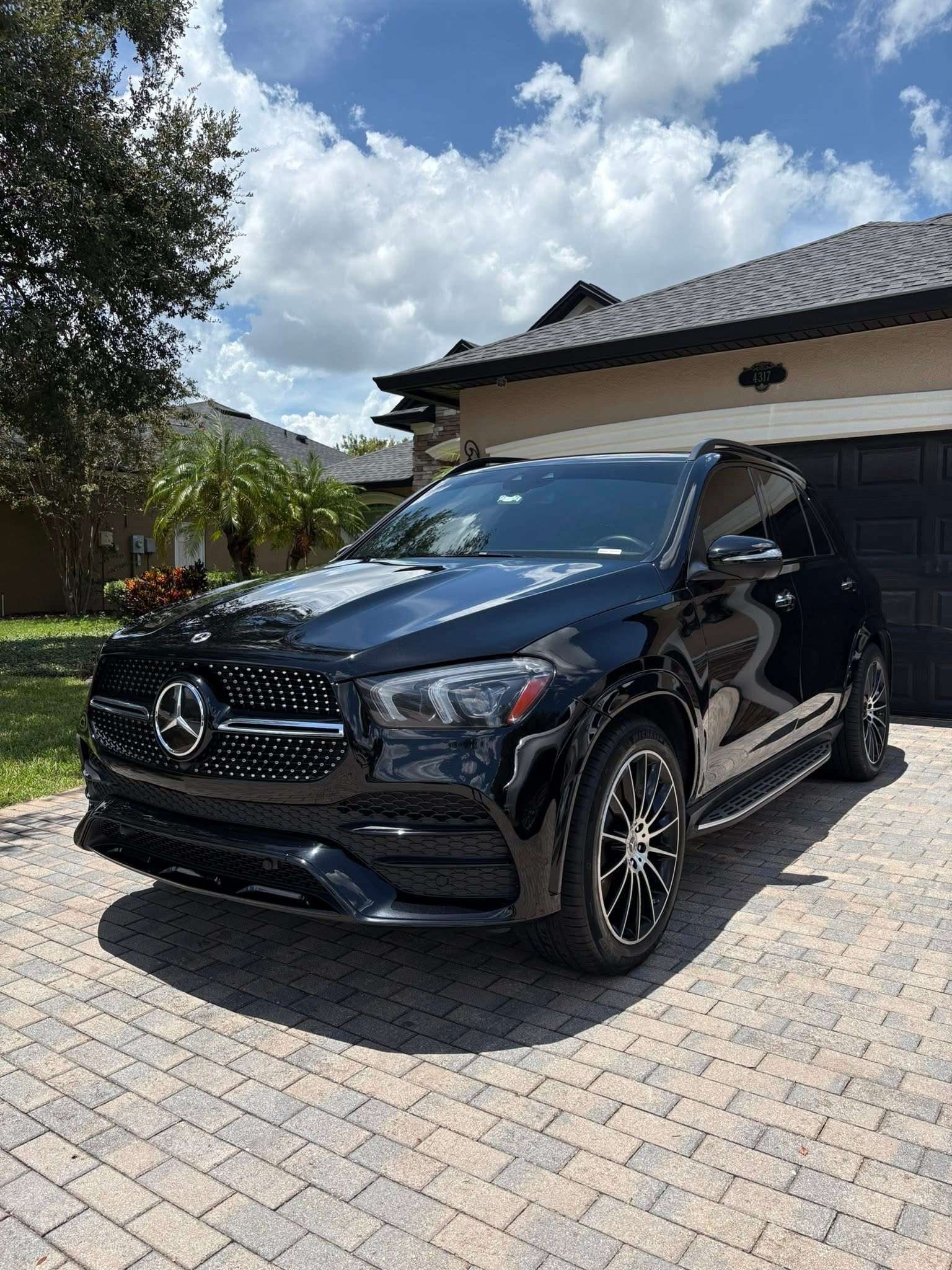
For a car that lives outdoors in Florida, a ceramic coating gives the longest protection, a graphene coating gives months, and wax gives weeks. At Nichols Mobile Detailing, the $300 Signature Detail includes a 6-month graphene carbon coating, the $450 Ultimate includes a 1-year ceramic coating, and standalone ceramic runs $250, $750 or $1,250 for 1, 3 or 5 years.
| Longest protection | Ceramic coating, offered by Nichols in 1, 3 and 5-year tiers at $250, $750 and $1,250 (Nichols price list) |
|---|---|
| Mid-term protection | 6-month graphene carbon coating, included in the $300 Signature Detail (Nichols price list) |
| Short-term protection | Car wax; UF/IFAS says a waxed front end plus removal within 24 hours protects against lovebugs (UF/IFAS IN694) |
| Why Florida is hard on paint | Florida is the internationally recognized benchmark for outdoor exposure testing (Q-Lab) |
| Sun exposure | A UV Index of 8 or higher is rated very high to extreme (U.S. EPA) |
What is the difference between wax, sealant, graphene and ceramic?
They are all sacrificial layers that sit on top of your clear coat, and the main difference is how long they hold up. Wax is a soft natural or blended layer that adds warmth and gloss but wears off quickly. A synthetic sealant lasts longer than wax. Graphene and ceramic coatings are harder, chemically bonded layers that last months to years.
Products sold as graphene coatings vary by brand, and marketing claims about them vary even more. The practical way to compare is by the duration the installer stands behind. In Nichols' lineup, that is six months for graphene and one, three or five years for ceramic.
| Option | Type of layer | Typical lifespan | Where it fits at Nichols |
|---|---|---|---|
| Wax | Soft, applied by hand | Weeks; varies by product | Not on the Nichols price list |
| Sealant | Synthetic polymer | Longer than wax; varies by product | Not on the Nichols price list |
| Graphene coating | Hard, bonded coating | 6 months (Nichols Signature) | Included in the $300 Signature Detail |
| Ceramic coating | Hard, bonded coating | 1, 3 or 5 years (Nichols tiers) | $250 / $750 / $1,250, or 1 year in the $450 Ultimate |
Why is Florida so hard on paint protection?
Florida combines the three things that break down coatings fastest: strong sun, heat and moisture. Q-Lab, a company that runs outdoor weathering tests for paint and coatings makers, describes Florida as having high-intensity sunlight, high year-round temperatures, high annual rainfall and high humidity, and calls it the internationally recognized benchmark location for outdoor exposure testing.
The EPA's UV Index scale rates 8 and above as very high to extreme and advises extra caution from late morning through mid-afternoon, the same hours a parked car's paint takes the most sun. Add lovebug season, afternoon storms and mineral-heavy sprinkler or tap water, and a protection layer in Lakeland simply works harder than one in a milder climate.
Is graphene better than ceramic coating?
Not by default. Graphene and ceramic coatings both create a slick, water-repelling surface, and the better choice depends on how long you want the protection to last and how you will maintain it. Claims that one material is categorically superior come mostly from product marketing, not from independent testing.
At Nichols the decision is simpler. The 6-month graphene carbon coating comes bundled in the Signature Detail with an iron decontamination, clay bar and deep interior clean, so it suits someone who wants a full reset and protection through a season. A ceramic tier suits someone who plans to keep the vehicle for years and wants fewer reapplications.
How much does each option cost at Nichols?
Protection is available inside a package or on its own. The Signature Detail at $300 and the Ultimate Detail at $450 include a coating plus a full interior, while the standalone ceramic tiers focus on the exterior: full body, wheel faces and windshield.
If you want every window coated, not just the windshield, the all-glass ceramic coating is a $150 add-on. Coated glass sheds rain more easily, which helps during summer storms on I-4 and the Polk Parkway. Prices are for a standard vehicle; larger SUVs, trucks and vans are quoted higher because there is more surface to prepare and coat.
| Option | Price | Protection length | Also includes |
|---|---|---|---|
| Signature Detail | $300 | 6 months (graphene carbon) | Iron decon, clay bar, deep interior, leather care |
| Ultimate Detail | $450 | 1 year (ceramic) | Engine bay, paint prep, carpet and seat extraction |
| Ceramic, 1-year | $250 | 1 year | Full body, wheel faces, windshield |
| Ceramic, 3-year | $750 | 3 years | Full body, wheel faces, windshield |
| Ceramic, 5-year | $1,250 | 5 years | Full body, wheel faces, windshield (best value) |
Should paint be corrected before a ceramic coating?
If the paint has visible swirls or haze, correct it first. A coating is clear and locks in whatever is underneath, so swirl marks under a 5-year coating stay visible for five years. Correction removes those defects so the coating seals in a clean finish.
Nichols prices correction as a ladder: a $250 gloss enhancement for depth and clarity, a $700 1-step correction for light swirls and haze, and a $1,500 2-step correction that compounds and then polishes heavier defects. Newer or well-kept paint often needs only the gloss enhancement or the paint prep already built into the Ultimate Detail.
How do you keep a coating working in Lakeland?
Wash it gently and often, and get contaminants off quickly. UF/IFAS Extension says lovebug residue becomes acidic within 24 hours and that sun-baked residue left for an extended time can damage paint, so a coated car still needs bugs removed promptly. A coating makes that removal faster and safer.
Hard water is the other enemy. City of Lakeland water tested at 108 to 126 mg/L of hardness at its treatment plants in 2023, which the USGS classifies as moderately hard to hard. Drying a car by hand instead of letting it air dry keeps those minerals from spotting the surface. Nichols maintenance plans at $80 weekly, $110 bi-weekly or $130 monthly include a scratch-free hand wash and hand dry.
From the driveway
We offer protection in three steps because people keep vehicles for different lengths of time. The Signature Detail carries six months of graphene, the Ultimate a year of ceramic, and the standalone tiers go to five years, with the 5-year package listed as the best value on our own price sheet.
Most of what we coat lives in a carport or driveway, not a garage: Escalades, Denalis, F-250s and Broncos that see Florida sun every day. That is the case the longer tiers are built for.
Our Google reviews, 5.0 across 43, describe the same habits a coating needs: Lisa M. called the crew "super detail oriented," and Bobby B. wrote, "his attention to detail is what separates him from other mobile detailers."
Ceramic Coating in Lakeland and Polk CountyFrequently asked questions
How long does ceramic coating last in Florida?
It depends on the product and the tier you buy. Nichols Mobile Detailing offers ceramic coating rated for 1, 3 or 5 years at $250, $750 and $1,250. Florida's sun, heat, rain and humidity are hard on any coating, so regular hand washing and prompt bug removal help a coating reach the full length of its tier.
Is wax enough to protect a car in Florida?
Wax helps, but it wears off quickly in Florida heat and rain. UF/IFAS Extension recommends a waxed front end plus removing lovebugs within 24 hours during swarms. For protection that lasts a season or longer, a graphene coating such as the 6-month layer in the Nichols Signature Detail, or a ceramic coating, holds up far longer than wax.
What is a graphene carbon coating?
A graphene carbon coating is a hard, bonded protective layer that makes paint slick and water-repelling, similar in purpose to a ceramic coating. At Nichols Mobile Detailing, a 6-month graphene carbon coating is included in the $300 Signature Detail, applied after an iron decontamination and clay bar so it bonds to clean paint.
Do I need paint correction before ceramic coating?
Only if the paint has swirls, haze or scratches you want gone, because a coating locks in whatever is underneath it. Nichols offers a $250 gloss enhancement, a $700 1-step correction for light swirls and a $1,500 2-step correction for heavier defects. Paint in good shape may need only the paint prep included in the Ultimate Detail.