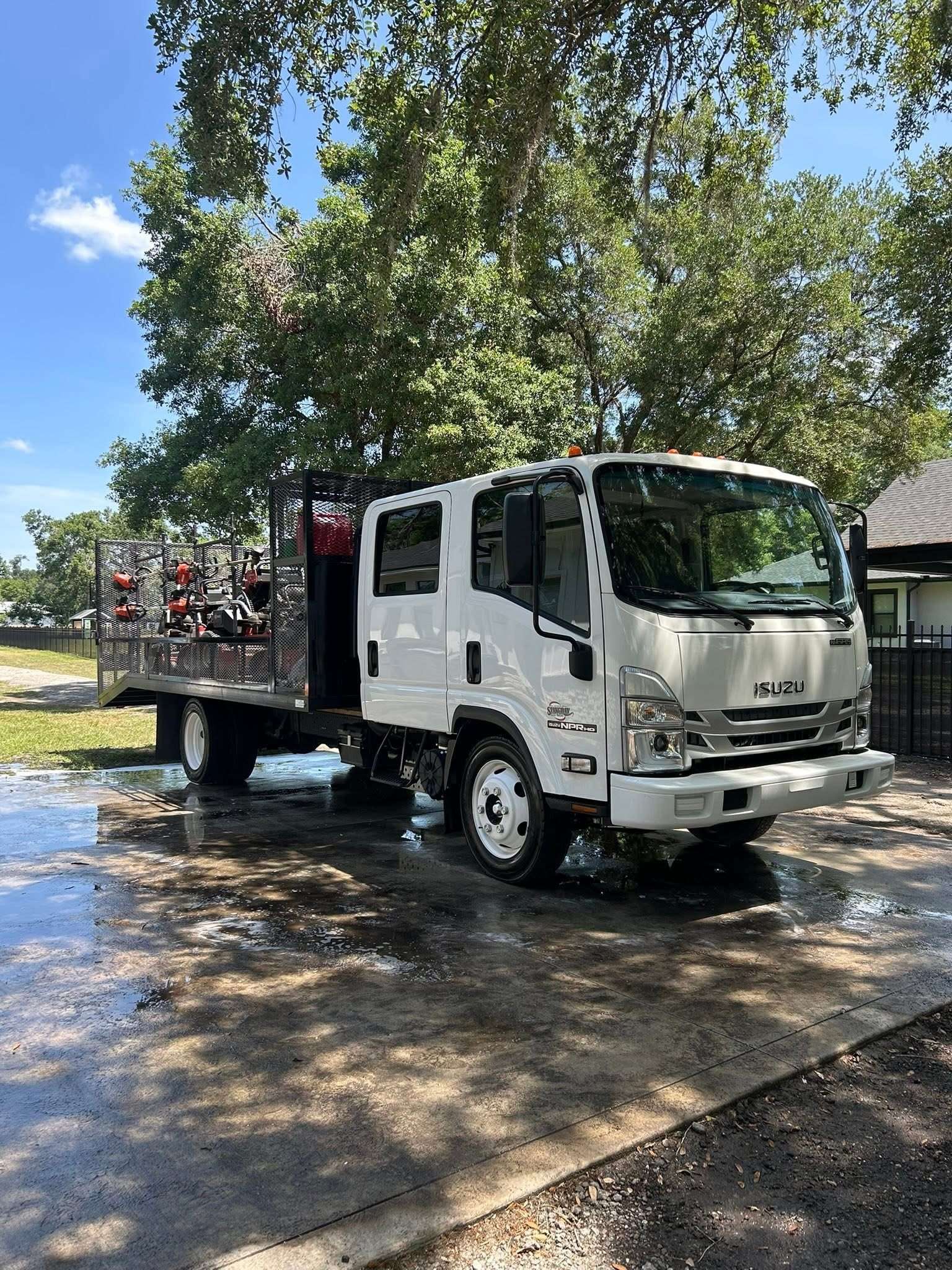
Wash lovebugs off within 24 hours. UF/IFAS Extension found that smashed lovebugs start near neutral at pH 6.5 but turn acidic at pH 4.25 within 24 hours, and that paint is not permanently damaged if it is cleaned before the sun bakes the residue for a day or two. Lakeland tap water also tests moderately hard to hard, so hand drying matters as much as washing.
| Lovebug flights | Two flights a year of about four weeks each, April–May and August–September (UF/IFAS IN204) |
|---|---|
| The 24-hour window | Lovebug residue goes from pH 6.5 to pH 4.25 within 24 hours (UF/IFAS IN694) |
| When damage happens | Residue baked by the sun for an extended time can damage paint; cleaning within a day or two avoids it (UF/IFAS IN694) |
| Lakeland water hardness | 108 to 126 mg/L at the city's treatment plants in 2023 (City of Lakeland) |
| What that means | 61–120 mg/L is moderately hard and 121–180 mg/L is hard (USGS) |
When is lovebug season in Polk County?
Florida gets two lovebug flights a year. UF/IFAS Extension says each generation lasts about four weeks, in April–May and again in August–September, with the large adult populations most noticeable in May and September. Exact dates shift from year to year and from one part of the state to another.
The flights happen in daylight, and UF/IFAS notes that lovebugs are drawn to light-colored and freshly painted surfaces and to heat. That makes the front of a white truck on I-4 or US-98 on a warm afternoon close to the worst case. Lovebugs have been collected in Florida in every month except November, so a stray splatter can happen any time.
Do lovebugs really eat through car paint?
Not instantly. UF/IFAS lists the idea that lovebug body fluids immediately dissolve paint as a myth. Researchers found that macerated lovebugs are close to neutral, at pH 6.5, but become acidic, at pH 4.25, within 24 hours. Paint coated with lovebugs and kept in a humid indoor setting for 21 days was not damaged.
Sun is what changes the outcome. UF/IFAS says no permanent damage is caused if the surface is cleaned before the coating of bugs is baked by the sun for a day or two, but a lovebug-coated surface exposed to sun for an extended time may be damaged by the insects and their removal. Its advice: protect the front end with car wax and remove lovebugs within 24 hours.
Why do hard water spots etch paint?
Hard water carries dissolved minerals, and when the water evaporates the minerals stay behind. The USGS explains that hardness comes mainly from calcium and magnesium compounds and classifies 61 to 120 mg/L as moderately hard and 121 to 180 mg/L as hard.
The City of Lakeland's own 2023 treatment plant analysis puts finished tap water at 108 mg/L at the Combee plant and 126 mg/L at the Williams plant. Let that water dry on a dark, sun-heated hood, from a hose wash or a sprinkler, and the mineral rings it leaves can bond to the surface. Left long enough, they can etch into clear coat and need polishing to remove.
| Treatment plant | Finished water hardness | USGS classification |
|---|---|---|
| Combee | 108 mg/L as CaCO3 | Moderately hard (61–120 mg/L) |
| Williams | 126 mg/L as CaCO3 | Hard (121–180 mg/L) |
How do iron decon, clay and coating protect paint?
Each step handles a different layer of the problem. A careful hand wash removes fresh bugs and loose dirt. Iron decontamination and a clay bar pull out bonded contamination a wash leaves behind. A coating then gives bugs and minerals a slick surface to sit on instead of bare clear coat, so the next wash takes them off more easily.
Damage that has already etched in is a polishing job, not a washing job, because the mark is now below the surface rather than sitting on it. Nichols matches the fix to how far it has gone, and the table below shows where each service fits.
| Paint condition | What fixes it | Nichols service |
|---|---|---|
| Fresh bugs, light spotting | Hand wash with bug removal and hand dry | Essential Detail $150, or maintenance from $80 a visit |
| Bonded contamination, rough feel | Iron decontamination and clay bar | Signature Detail $300, with a 6-month graphene coating |
| Light etching or haze | Machine polish | Gloss enhancement $250 or 1-step correction $700 |
| Deeper etching and swirls | Compound then polish | 2-step paint correction $1,500 |
| Protecting it afterward | Bonded coating | Ceramic 1, 3 or 5 years: $250, $750, $1,250 |
What should you do after driving through a lovebug swarm?
Treat it as a same-day or next-day job. The UF/IFAS 24-hour guidance is the clock that matters, and in May or September a single drive can coat the bumper, hood, mirrors and windshield.
If you cannot wash the car right away, park it in shade. Sun is what turns a nuisance into damage.
- Soak the front end first so the bugs soften before you touch them
- Wash with a soft mitt; do not scrub dried bugs with a dry towel
- Rinse and hand dry so hard water does not leave spots behind
- Park in a garage or carport during the flight weeks when you can
- Book a decontamination or coating after the season to reset the paint
From the driveway
Bug removal is part of every Nichols wash, from the $150 Essential Detail to each maintenance visit, and every one of those ends with a hand dry rather than a drip dry. That combination is what the lovebug and hard water problems call for.
We work Lakeland and Polk County Monday through Saturday from 7 AM to 5 PM, and the rig brings its own water and power, so a swarm on Tuesday's commute can be handled in the driveway or the office lot before it has days to bake.
Customers who stay on a schedule see the least damage. Landen V. wrote that Nichols "keeps me on his schedule like clockwork," and Daniel S. said the company "shows up on time." During lovebug season, on time is the whole point.
Paint Correction in Lakeland and Polk CountyFrequently asked questions
How long can lovebugs stay on a car before damaging paint?
Wash them off within 24 hours. UF/IFAS Extension found lovebug residue becomes acidic, around pH 4.25, within 24 hours, and that paint is not permanently damaged if cleaned before the sun bakes the residue for a day or two. Extended sun exposure is what causes damage, so shade buys time if you cannot wash right away.
When is lovebug season in Florida?
Florida has two lovebug flights a year, each lasting about four weeks, in April–May and August–September, according to UF/IFAS Extension. The heaviest populations are usually noticed in May and September. Dates vary by year and region, and lovebugs have been collected in Florida in every month except November.
Is Lakeland tap water hard enough to spot paint?
Yes. The City of Lakeland measured finished water hardness of 108 mg/L at its Combee plant and 126 mg/L at its Williams plant in 2023. The USGS classifies 61 to 120 mg/L as moderately hard and 121 to 180 mg/L as hard. Water left to evaporate on paint leaves those minerals behind as spots.
Can hard water spots be removed from car paint?
Fresh spots usually come off with a proper wash, decontamination and hand dry. Spots that have etched into the clear coat need machine polishing. Nichols Mobile Detailing offers a $250 gloss enhancement, a $700 1-step correction and a $1,500 2-step correction, and a ceramic coating afterward makes future spots easier to wash away.
Does ceramic coating protect against lovebugs?
It helps, but it does not replace washing. A coating gives lovebug residue a slick surface instead of bare clear coat, so it releases more easily during a wash. UF/IFAS still recommends removing lovebugs within 24 hours. Nichols offers ceramic coating for 1, 3 or 5 years at $250, $750 or $1,250.
Sources
- UF/IFAS Extension, Living with Lovebugs (ENY-840/IN694)
- UF/IFAS Featured Creatures, Lovebug, Plecia nearctica Hardy (EENY-47/IN204)
- UF/IFAS News, Fact or Fiction? The Truth About Those Pesky Lovebugs
- U.S. Geological Survey, Hardness of Water
- City of Lakeland Water Utilities, Water Quality (treatment plant chemical analysis, 2023)